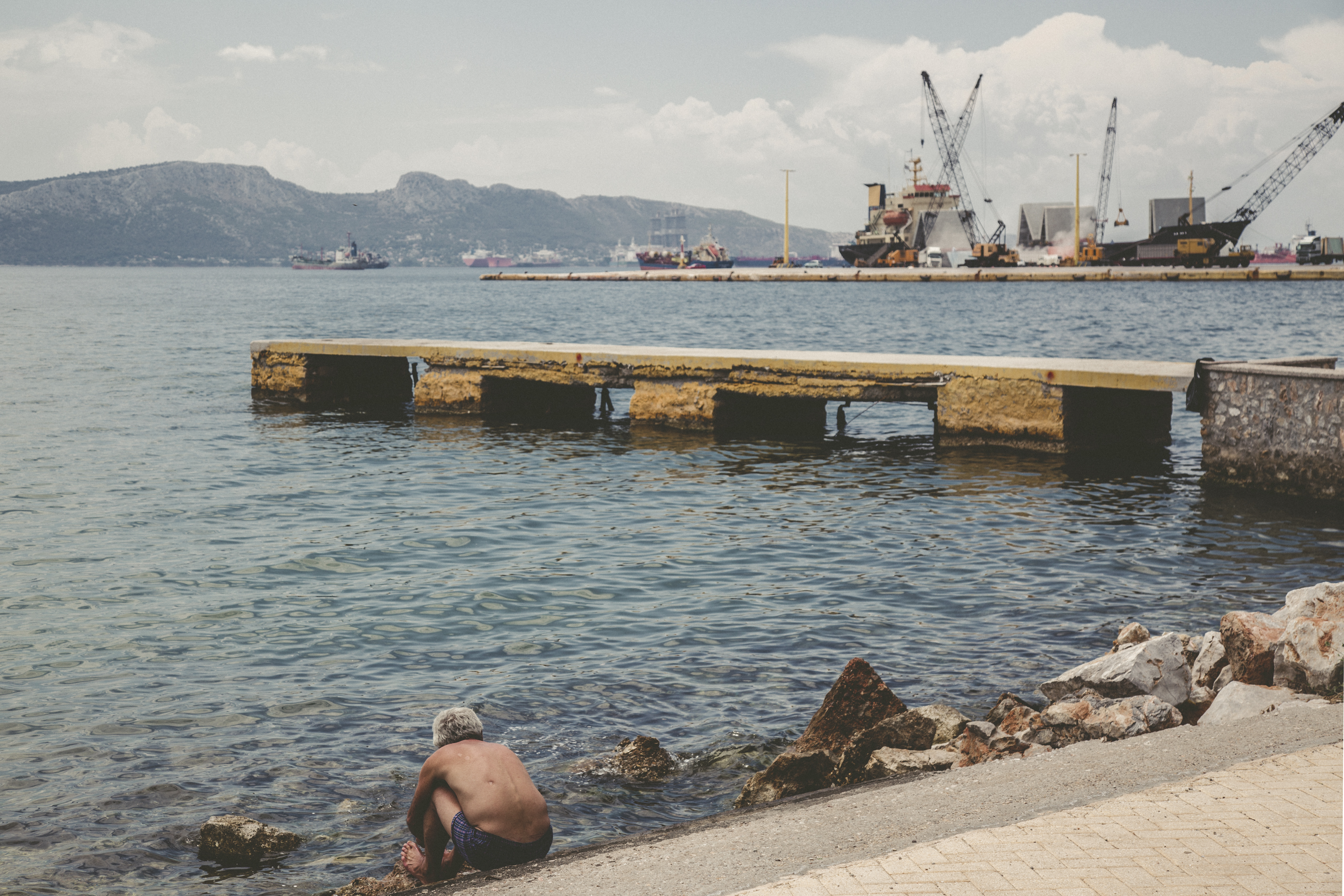
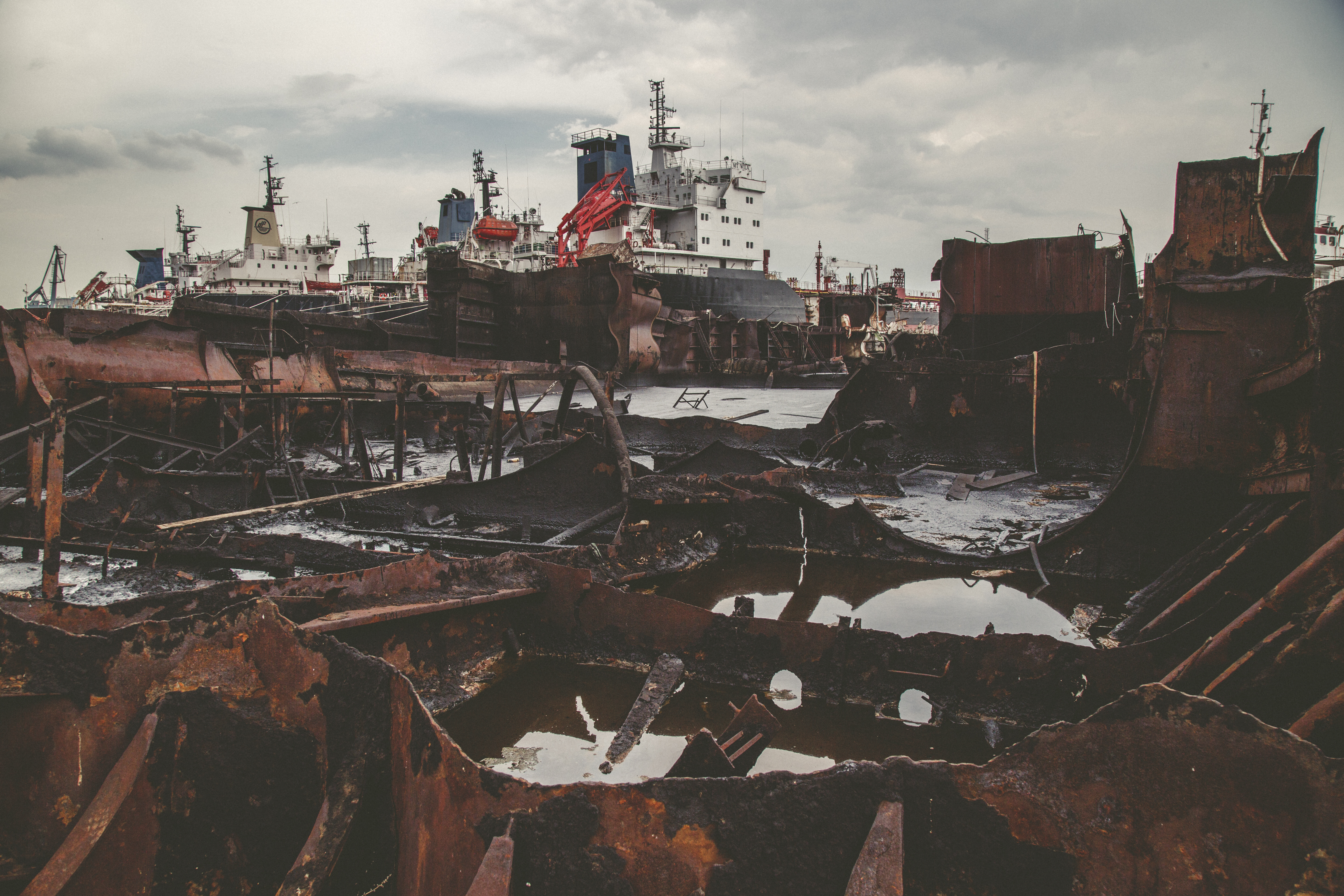
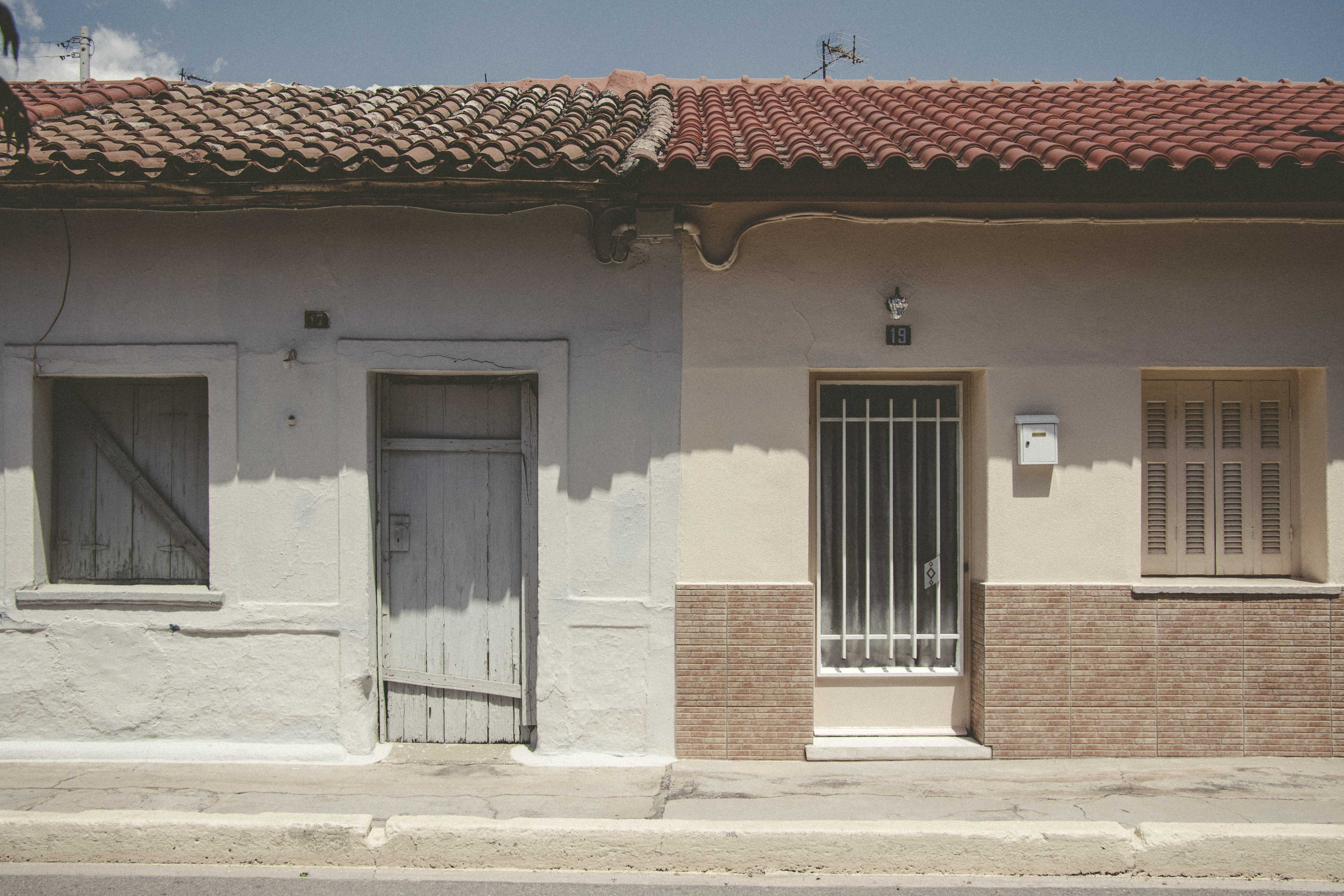
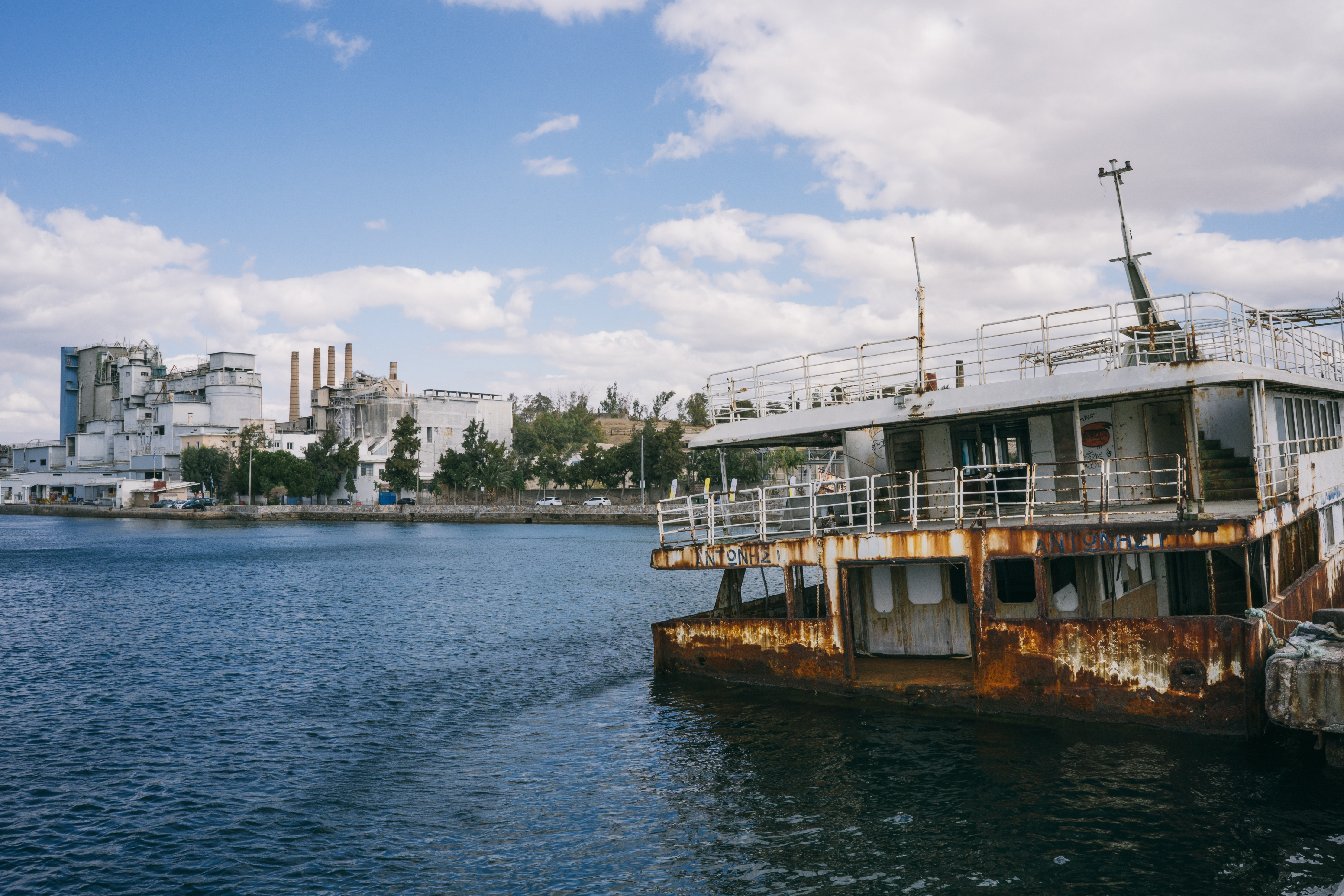
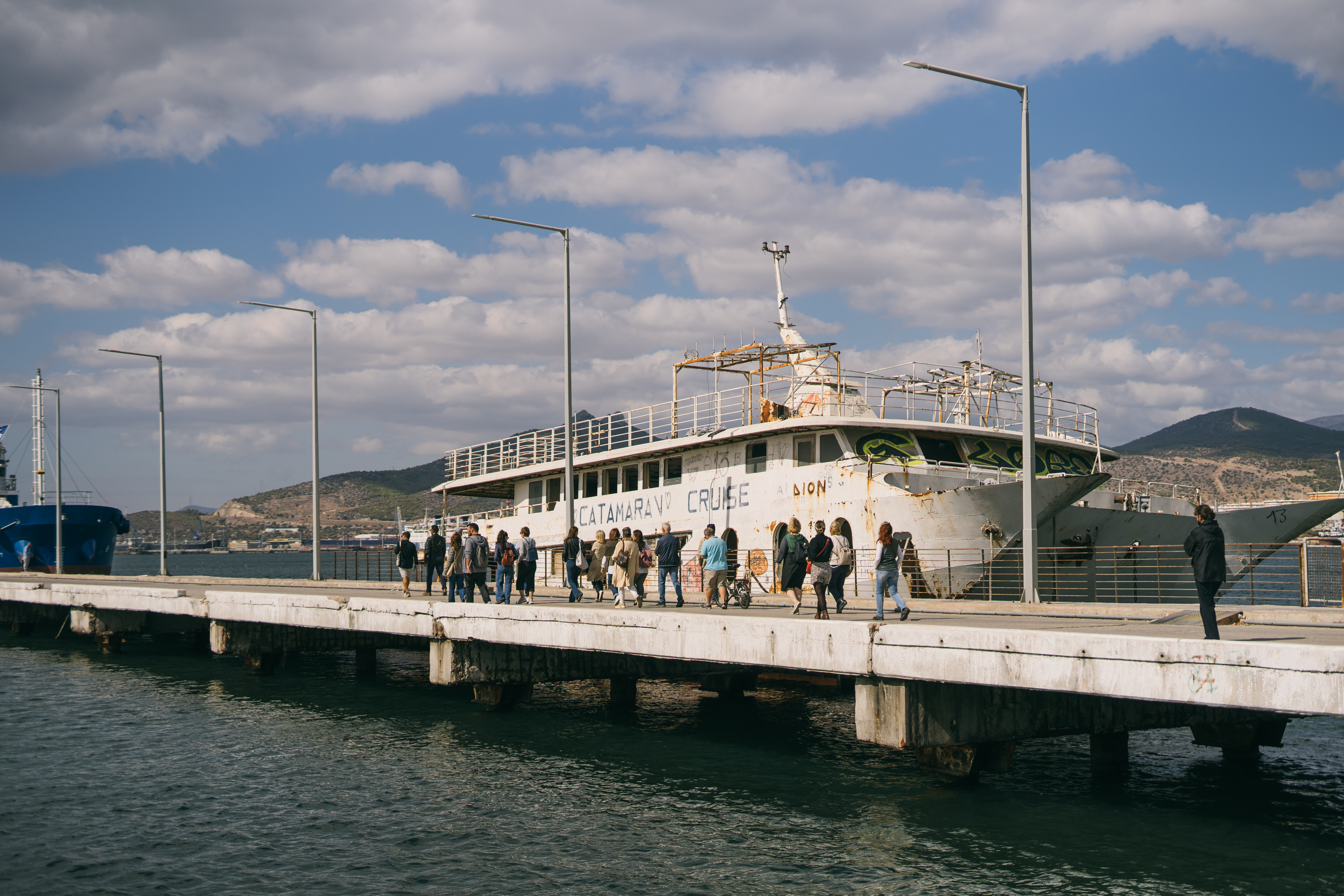
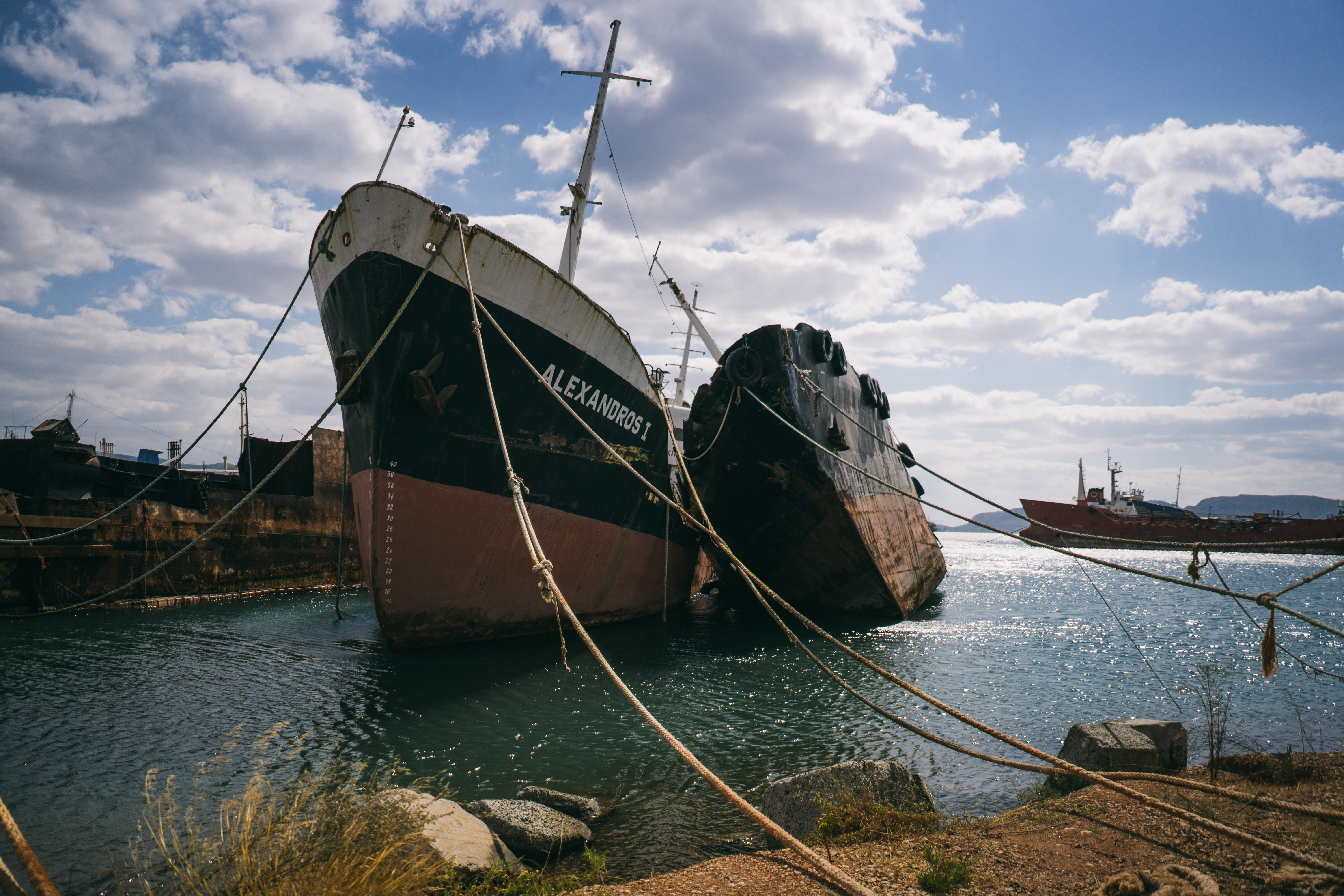
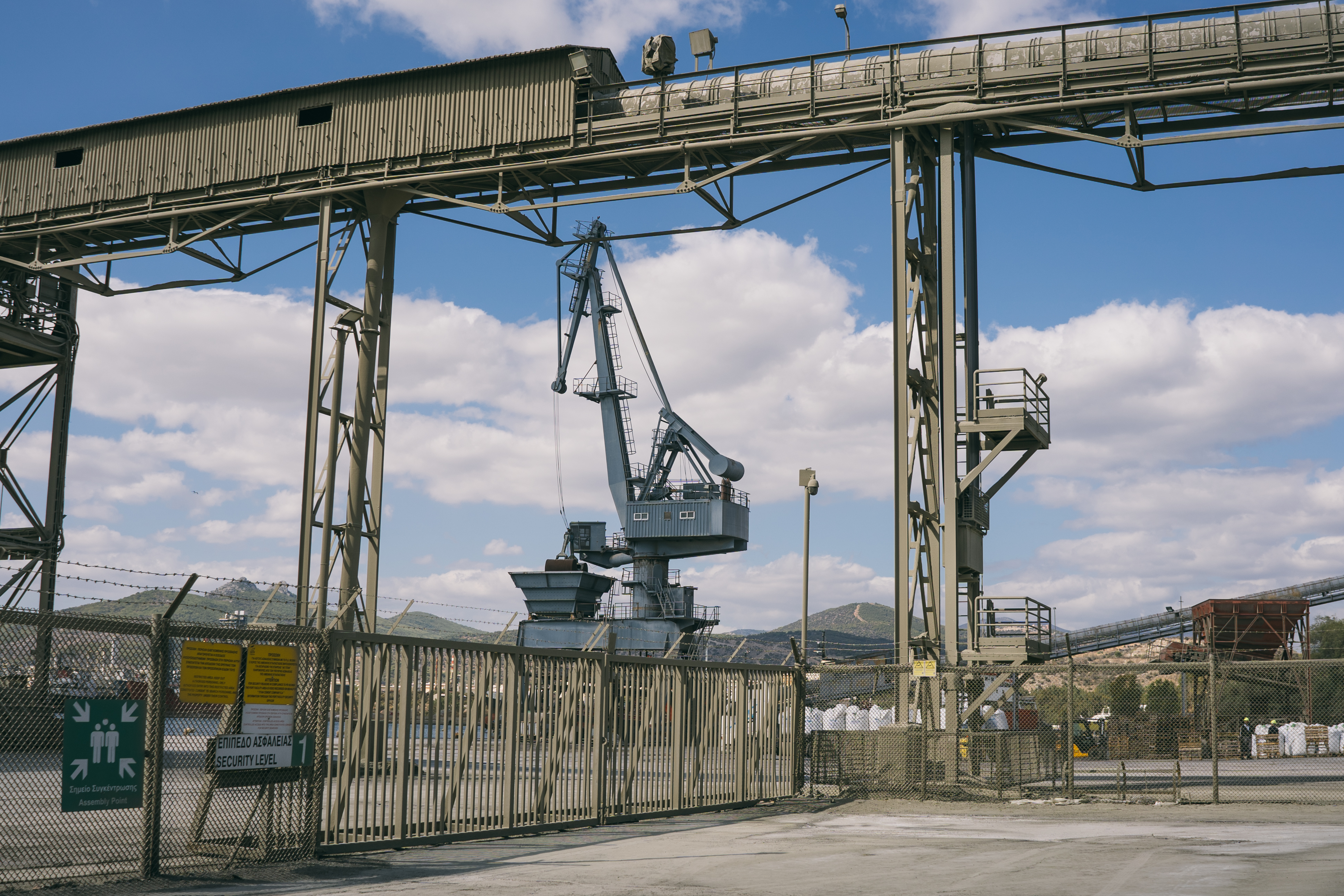
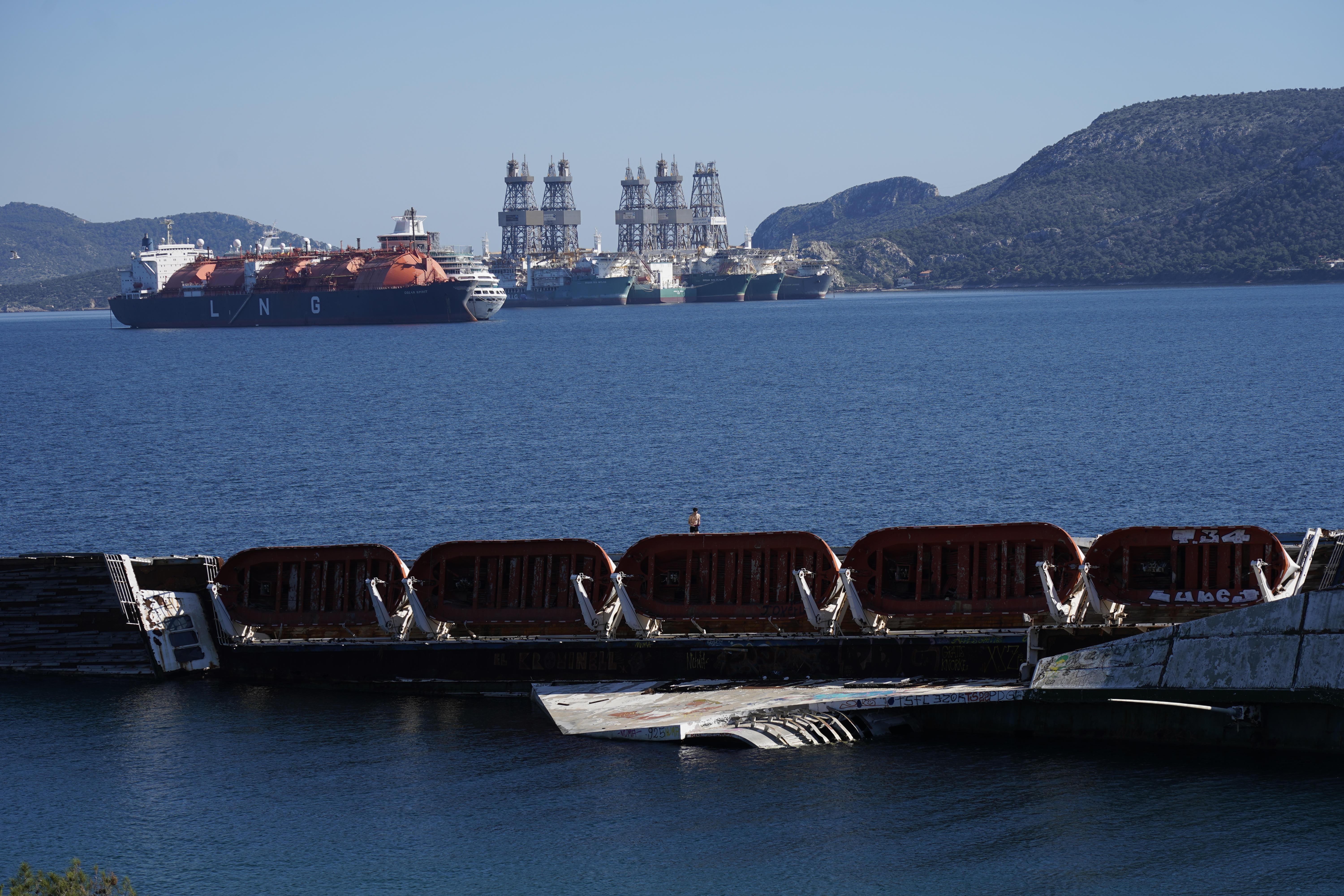
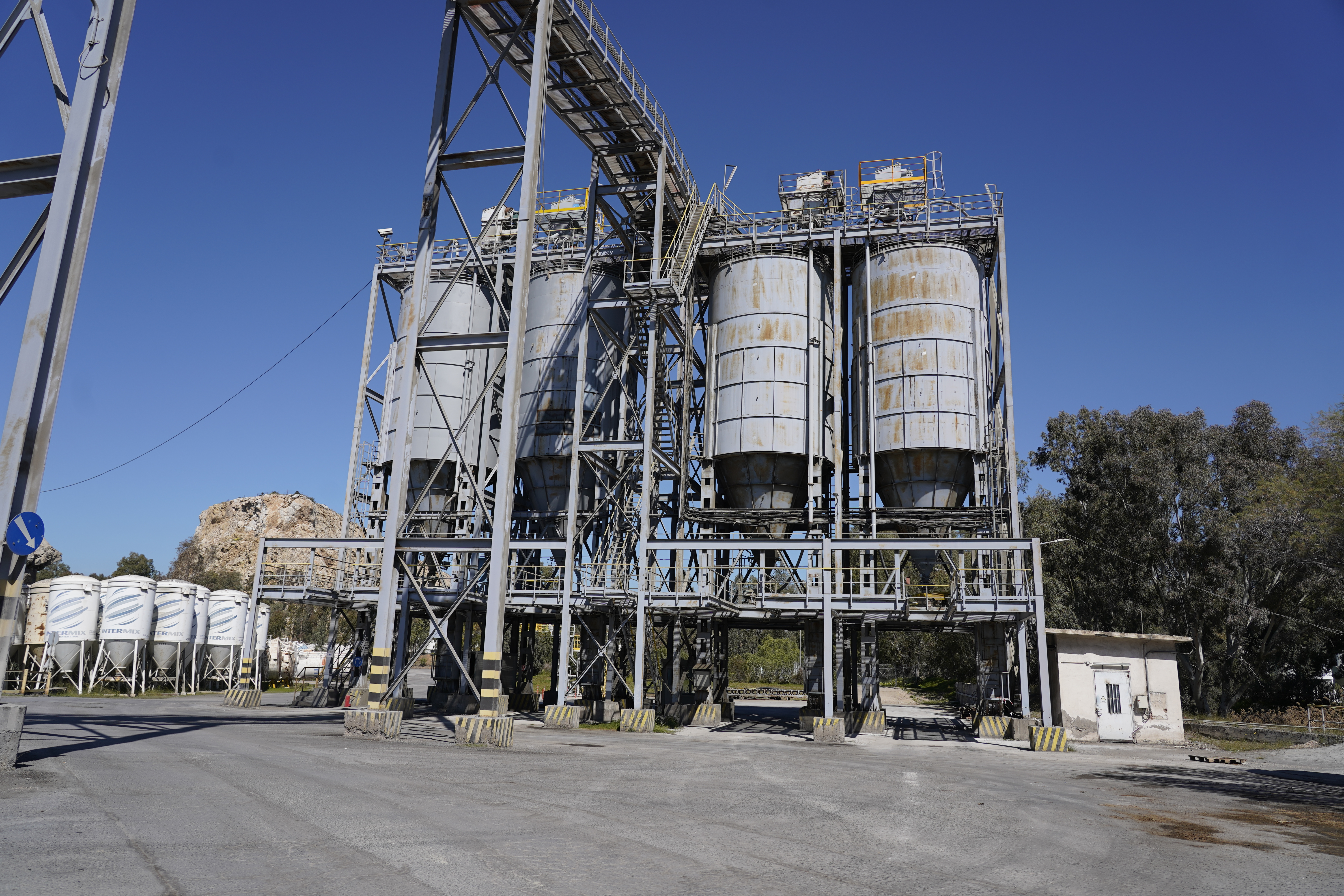
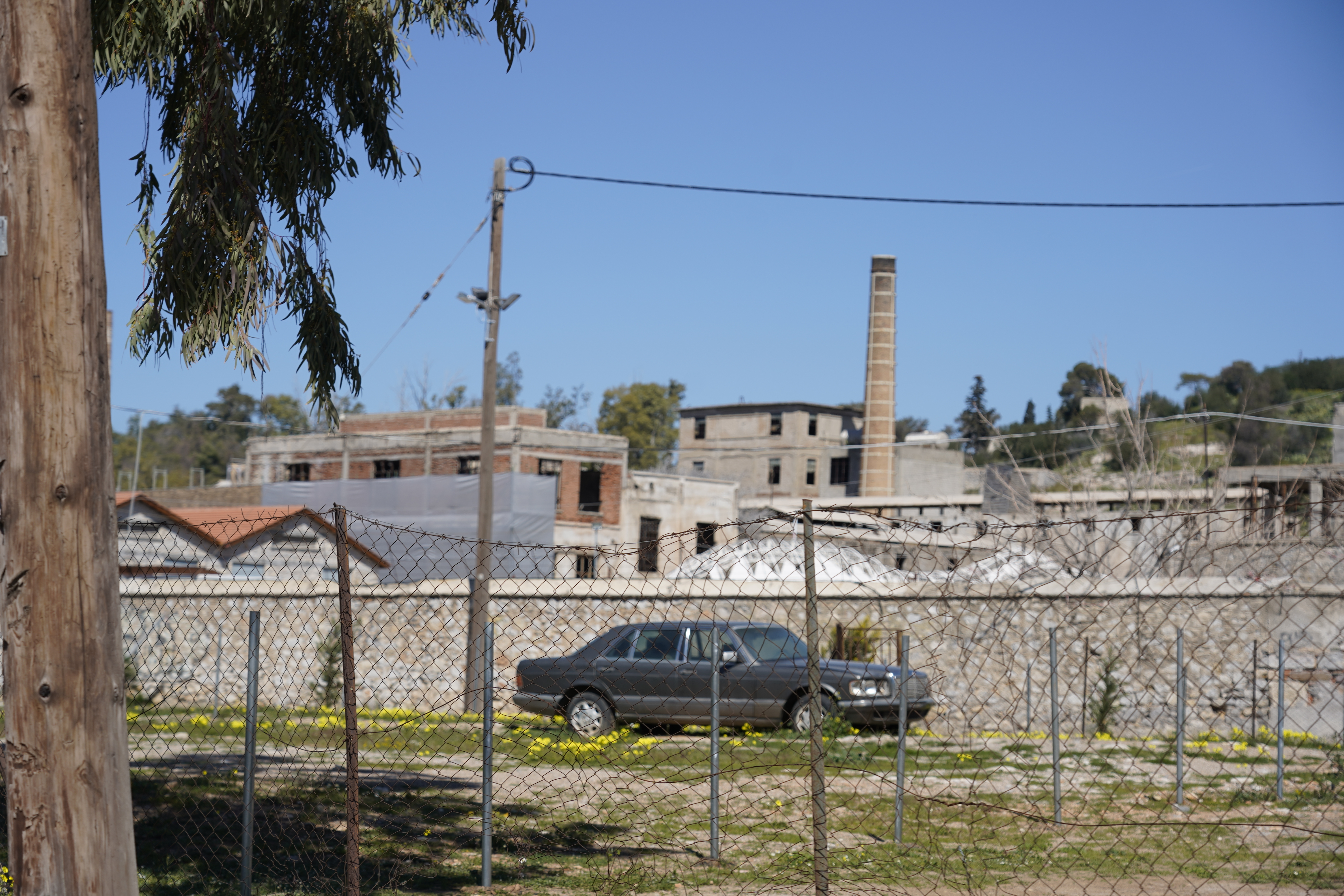
The transformation of Eleusis into Mordor is (without doubt) one of the greatest environmental crimes of the 20th century. Within just a few decades, the once lush orchard of the goddess Demeter was handed over to heavy and polluting industries that poisoned the air, erased historic hills and fertile fields, and buried the seabed under countless tons of poisonous sediment, despite the constant protests of residents who watched their city and their lives being destroyed. The environmental history of Eleusis stands as a valuable (and unforgettable) example of human absurdity and the tragic mistakes that exemplify the twentieth century.
Before the industrial development of the area, Eleusis’s mild climate and beautiful coastline attracted both locals and Athenians, who would arrive here by small boats from Piraeus. The morning arrival of the boats, usually docking shortly after the fishermen’s return, took place in a real pandemonium of whistle sounds and the shouts of young deckhands. Many visitors would not miss the chance to taste the delicious “green mullet” of Eleusis, named after the characteristic green line along its body.
The coastal stretch to the west of Eleusis was once a dreamlike sandy beach nearly a kilometre long, while the hinterland was covered with pistachio and almond groves. The area was locally known as the "Makra Ammos” (Long Sand) and was preferred by the locals for their summer swims, once the main city beach became polluted by industrial waste. It was also known as Eleusis’s “laundry,” because the clean spring waters that once gushed from this area (and still exist today, buried under tons of debris) were ideal for washing woollen fabrics.
The Saronic Gulf waters were once extraordinarily rich, and an experienced fisherman could hope for a good harvest of dusky grouper, common pandora, common dentex, gilt-head bream, blue whiting, weever, chub mackerel, black seabream, cuttlefish, squid, and octopus. From the islets of Fleves to Eleusis and Pachi, the sea sustained numerous professional fishermen and some fifty thousand amateurs.
As the years passed and industrial activity in Eleusis intensified, the city’s coastal front drifted further away from the idyllic landscape it once was and was transformed into an industrial zone. As a result, on 12 September 1930, lawyer Dimitrios Kriekoukis sent a letter to the Eleusis Community Council, drawing attention to the devastating impact of the cement factory on the beach’s quality: “...Very often the beach of Eleusis, the only place of recreation for the inhabitants, becomes inaccessible, as it is entirely covered by the dust emitted from the cement factory and by the lack of absorption mechanisms.”
Despite ongoing protests, sea pollution continued for many decades. Five ship-breaking yards and hundreds of decommissioned (or half-sunken) vessels “enriched” the sea with a toxic mixture of chemicals and oil. In the early 1980s, 70% of all decommissioned ships in Greece were anchored in the Bay of Eleusis. The concentrations of nitrogen and phosphorus were six times above normal levels, while heavy metals reached values up to fifty times higher than those of clean waters.
Eventually, 13 of the city’s 15 kilometres of coastline were surrendered to industry, filled in or covered with port infrastructures to serve its needs. Eleusis became surrounded by two refineries, two steelworks, two shipyards, three cement factories, and over 700 smaller and larger industrial units. The major factories dominated the shoreline with their private docks and piers, where ships could moor to deliver raw materials or load exported industrial products. Thus, the seaside paradise that Eleusis once was turned into a nightmare, a place where its inhabitants lost access to the sea, the wetland suffered irreversible damage, and the bond between humanity and nature was irreparably severed, leaving behind a landscape of alienation and loss.
The session began with a warm-up in which participants mapped their relationship with Eleusis, where they come from, where they live, how long they have lived in the city, and the places they love or avoid. As they moved through the space “as if” navigating Eleusis, they stopped at locations representing areas they experienced as problematic or disturbing, and shared what they saw and felt. This initial mapping brought forward a mix of frustration and anger about daily exposure to pollution, alongside sadness and grief for the loss of a once-liveable environment and the erosion of the city’s natural and cultural landscape.
Through role-taking around the main sources of pollution, framed as an imaginary seminar voting for the “best pollutant”, participants expressed bitterness, irony, and resignation, using dark humour to articulate feelings of powerlessness and long-term neglect. The discussion also connected pollution to the archaeological site and the myth of Persephone, shaping the session’s central theme, “Persephone’s Nightmare,” which evoked emotions of suffocation, entrapment, and threat, as if the city itself was caught in an ongoing underworld-like condition.
In the bodystorming phase, participants embodied the two themes (“Persephone” and “Her Nightmare”) through physical group sculptures, sound, and movement. This intensified the emotional register, surfacing anxiety, tension, and heaviness in the “Nightmare” embodiment, contrasted with tenderness, vulnerability, and longing for relief in the “Persephone” embodiment. As groups switched roles, participants reported a clearer awareness of how pollution is experienced both individually and collectively, shifting between exhaustion and a sense of shared recognition.
The closing walk, where participants paused at places in Eleusis they value, allowed the group to reconnect with feelings of affection, pride, and hope, suggesting that despite the burden of pollution, emotional bonds to the city remain strong. The final one-word check-out captured the session’s emotional arc: from anger, sadness, and suffocation, through irony and resignation, and toward connection and cautious hope.
Overall, the session enabled participants with diverse perspectives to engage with a shared environmental issue, fostered collective participation, and captured emotional and embodied responses to air pollution as material for artistic interpretation, while also prompting reflection on the city’s industrial legacy and environmental challenges.
The timeline includes significant dates and important historical events that have shaped the urban environment and the natural landscape of the city.
A second soap factory is founded by the Hatzilias - Doxaras brothers.
The brothers Harilaou, members of the Greek community in Romania, establish the homonymous soap factory, which operates until 1960. Today it is known as the Old Olive Oil Factory, it houses the only open theatre in the city and is used for artistic activities.
The chemist Epaminondas Charilaos takes over the management of the family soap factory with Nikolaos Kanellopoulos as a partner. The factory turns a page and from a small-scale unit of 20 employees becomes a thriving business of 90 people, producing 640,000 kg of soap per year, an exportable product to the Mediterranean countries.
Epaminondas Charilaos founds the Harilaos and SIA Wine and Spirit Company in collaboration with Leo Economides. The factory is built to the north-west of the Olive Oil Mill-Saponery.
One of the largest and most important heavy industrial units in Greece, the cement industry "TITAN", is founded in Eleusis. It is built on the advantages of the city: the sea through which the raw material is transported, the coastal hills, ideal for the extraction of marl and the cheap labour of the region.
The Wine and Spirit Company Charilaos and Co. is renamed Votris. It produced wine, vermouth, cognac, and carbon disulphide.
As a result of the merger of the Hellenic Pyritide, Chemical and Industrial Products Company and the Maltsiniotis brothers' Pottery, “PYRKAL” was created. It will operate until the beginning of the 21st century, playing a dominant role in the defence armouring of the country.
KRONOS is founded, better known as the Public Limited Liquor Company.
Menelaos Sakellariou founded the first varnish industry in Greece under the name of Chemical Paint and Varnish Factory IRIS S.A. - Menelaos Sakellariou and Co., which flourished in the 1950s. It closed down shortly before 1970.
The "Olive Oil - Central Cooperative Union of Olive Oil Producers of Greece" is founded. The first factory operates at the old premises of the Hatzimeletis soap factory.
Chalyvourgiki S.A. is transferred from Piraeus Street to the coastal zone of Eleusis.
The Greek government signs the contract for the construction of the Aspropyrgos refinery. One year later, construction of the plant begins, which will be inaugurated in 1958.
Following pressure from citizens, Titan introduces, for the first time in Greece, electrostatic filters for the protection of the environment.
The Central Sewer of Athens is created, which discharges the wastewater of the capital's population to Keratsini, with the result that 20% of the wastewater passes into the closed bay of Eleusis, through the eastern, narrow, and shallow, communication channel of the two bays.
The Olive Factory-Soap Factory closes, and the land becomes the property of the National Bank of Greece.
In the 1960s, small units were established, such as the Gastouniotis Ice Factory, E.B.P.A., EDOK - ETER, Savvas Shipyards.
The PETROGAZ facility is inaugurated.
The Titan plant in Eleusis is expanded.
The Eleusis shipyards are founded by Stratis Andreadis.
The Hellenic Glassworks of Eleusis-Owens is founded. Two years later, production begins.
The Ioannis Latsis Group inaugurates the Petrola Hellas refinery in Eleusis with a temporary operating licence.
The operating licence of PETROLA SA becomes permanent. This is the current HELPE, located on the edge of the city, next to PYRKAL which they bought in 2017.
The highest levels of water pollution in the history of the Gulf of Eleusis are recorded, earning the shameful title of the most polluted sea in the Mediterranean due to the central sewage pipeline of Athens, industrial waste from fertilizer, refineries, metallurgy, cement, distilleries, distilleries, dye works, etc., shipbuilding, repair, and dismantling of ships.
The IRIS factory closes down.
The amount of goods handled from and to the port of Eleusis, on the north coast of the bay, is three times the amount of the port of Piraeus.
The port of Eleusis is once again in the lead, hosting 70% of the country's decommissioned ships.
The Kronos factory closes down.
The Wastewater Treatment Centre operates in Psyttaleia (a small island in the Saronic Gulf between Salamis and Piraeus, known for the Battle of Salamis). This is where Attica's wastewater is biologically treated, leading to a 35% reduction in the environmental footprint of the K.A.A. (Central Sewerage Pipeline), an effort by the country to align with the EU directive to protect the country's water environment.
The company PETROLA HELLAS S.A. is merged with HELLENIC PETROLEUM S.A., through which the Group acquires the Eleusis refinery.
Titan closes its white cement production plant in Eleusis. It maintains the port facilities to serve the Kamari plant (Boeotia). It announces the 'Road Map for the future redevelopment of the Eleusis plant', which remains unused to this day.
The Bakopoulos shipbreaking yard in Kalymbaki closes down. Two years later (2016), the Savvas shipbreaker in Vlycha is closed.
PYRKAL closes down, ending three decades of underperformance. The facilities and the 400-acre plot of land are purchased by HELPE.
The Halyvourgia (Steelworks) closes, which employed about 600 workers, while during its heyday in the 1970s it employed more than four times as many workers.
Eleusis Shipyards is acquired by the US-based ONEX.