-
Meet the Artists of Transition to 8: European societies in flux
05.08.2025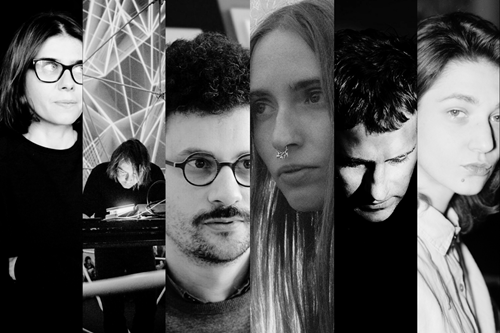
As the climate crisis escalates and air pollution continues to impact communities across Europe, art becomes an essential tool for translating invisible influences into forms we can feel, hear, and see. Transition to 8, supported by Creative Europe, brings together six visionary artists working at the intersection of environmental research, technology, and immersive art.
Each artist is tasked with transforming stories and data gathered from community sociodrama workshops - held in three cities; Eleusis, Rennes, and Ljubljana - into powerful artworks that question how we perceive our world. Within this framework, all artists will conduct a 3-week hybrid residency in one of the pilot cities where they will be participating in open studio days, artists’ talks and workshops with the local communities, in order to better immerse themselves in each local context. Their practices span sound art, sculpture, digital media, and public art, and together they will transform community memories on the impact of air pollution into emotionally charged, immersive artworks that make the invisible crisis of air pollution perceptible and shareable.
Floriama Candea - Eleusis residency
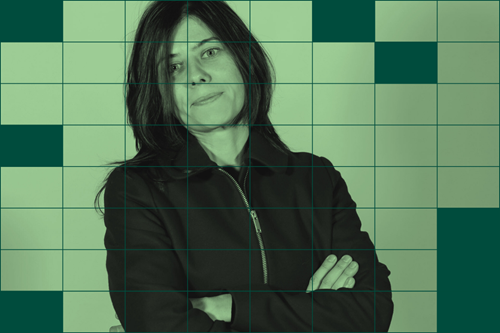
Floriama Candea is a visual artist and cultural researcher with a multidisciplinary practice rooted in visual arts, philosophy, and critical theory. Her work explores the intersection of science, technology, and aesthetics, often through kinetic installations, bio-based materials, experimental electronics, and soft sculpture.
Her practice invites critical reflection on how we perceive and relate to the world around us. With a versatile artistic language that includes interactive and kinetic installations, sculpture, video art, experimental electronics, drawing, printing, and the use of bio-based materials, she constructs hybrid visual identities that blur the boundaries between object and perception.
Her installations serve as dynamic environments that challenge inherited beliefs and mental constructs, prompting audiences to re-evaluate their assumptions and reimagine their relationship with the world. In doing so, she creates gateways to alternative narratives and speculative futures, making her practice a powerful space for ecological and philosophical imagination.
Floriama is also the co-founder of Qolony, a cultural NGO based in Bucharest that fosters interdisciplinary collaboration between contemporary artists, scientific researchers, and technologists. Through Qolony, she supports experimental practices and community-based exchanges that dissolve disciplinary silos and open up new creative horizons.
Fraction - Ljubljana residency
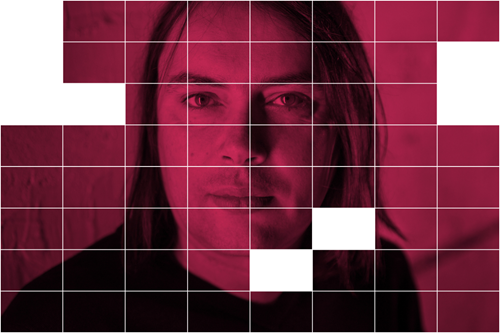
Eric Raynaud, internationally recognized by his artistic name Fraction, is a Paris-based composer, new media artist, and developer whose pioneering work explores the intersections of sound, immersive environments, and digital technology. With a strong foundation in spatial audio, Fraction designs multisensory experiences that transcend traditional forms of artistic expression, pushing the limits of how we perceive and interact with sound in space.
His research-driven practice merges generative systems, complex scenography, and mixed reality environments to create radical, multidisciplinary works that challenge and expand the notion of immersion. Fraction has collaborated with leading institutions in the field of experimental audio and digital art, including IRCAM and 4DSound, and his installations and performances, such as the internationally acclaimed Entropia, have been presented at venues and festivals across the globe.
In 2024, his innovative contributions were formally recognized with his appointment as associate composer at Hexagone Scène Nationale, a distinction awarded by the French Ministry of Culture. This milestone highlights his continued influence at the forefront of contemporary digital creation and his commitment to evolving the relationship between sound, space, and technology.
Guillaumit - Rennes residency
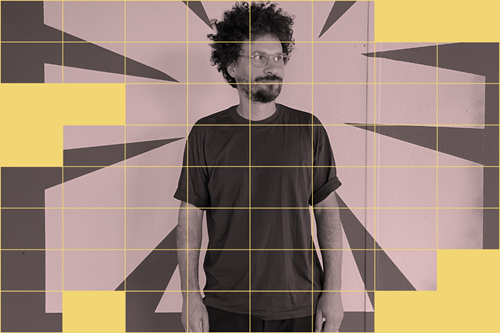
Guillaume Castagne, known professionally as Guillaumit, is a French visual artist, illustrator, and animator whose multidisciplinary approach merges digital media, graphic research, and public art. A curious jack-of-all-trades, Guillaumit began his career as part of the audiovisual duo Gangpol & Mit, a pioneering project that blended electronic music with animated film and toured widely across international stages. His aesthetic combines playful visual forms with sharp conceptual thinking, using technology as a tool for storytelling and civic engagement.
Working between studio-based graphic research at the Pola factory in Bordeaux and on-site artistic interventions, Guillaumit has developed a distinctive style of site-specific frescoes that respond directly to the social and architectural context of public spaces. His work often spans large surfaces, walls, floors, or urban facades, transforming everyday cityscapes into dynamic canvases for community dialogue. He recently completed the animated series Globozone for Arte, expanding his creative reach across formats and platforms.
Katarina Gryvul - Rennes residency
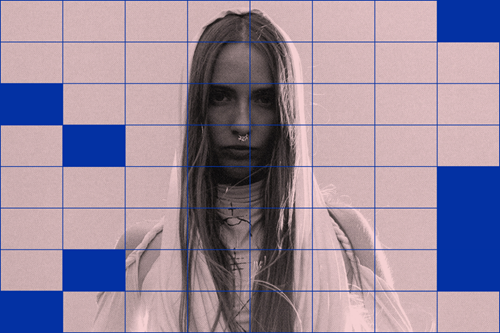
Katarina Gryvul is a Ukrainian composer, violinist, and music producer whose practice bridges the worlds of classical training and experimental sound art. With formal studies in violin performance and composition in Lviv and Krakow, and current specialization in computer music and sound art at the University of Music and Performing Arts in Graz, Gryvul has cultivated a distinctive sonic language that places timbre at the heart of her compositions.
Blending modular synthesis, live electronics, and ambisonic spatial techniques, her multichannel pieces unfold as richly textured soundscapes. During her studies, she focused on homophonic writing and the use of multichannel audio environments, developing an immersive approach to sound that envelops the listener both physically and psychologically.
Her music has been performed at leading international festivals, including Warsaw Autumn, Ars Electronica, CTM Festival, musikprotokoll, ZKM, L.E.V. Matadero, Gaudeamus, Nuits Sonores, Sanatorium of Sound, and Hyperreality, positioning her among the most exciting new voices in contemporary experimental composition.
Alongside her artistic work, she founded Gryvul School, an educational initiative that supports emerging musicians worldwide in developing their own creative voice, particularly in the fields of sound design and electronic composition.
MAOTIK - Eleusis residency
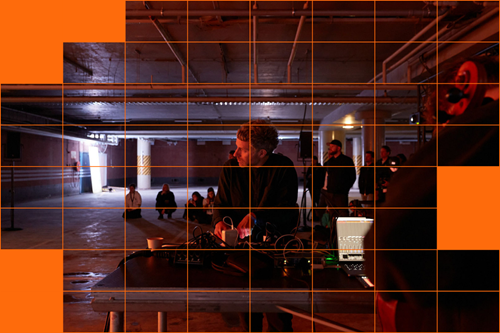
Mathieu Le Sourd, internationally known as MAOTIK, is a French digital artist whose work lies at the intersection of art, science, and technology. Specializing in immersive environments, interactive installations, and audiovisual performances, MAOTIK creates real-time digital experiences that redefine the boundaries between perception and reality. His practice combines generative art, algorithmic design, and custom-built software to produce ever-evolving audiovisual worlds that envelop the viewer in dynamic, multisensory environments.
MAOTIK holds a degree in Digital Media Production from the London College of Communication and a Master’s in Digital Arts from Pompeu Fabra University in Barcelona. Drawing inspiration from natural systems, his installations distill the essence of nature into abstract digital forms, audiovisual sculptures built on randomness, fluid motion, and data-driven design. Each work unfolds uniquely, offering non-repetitive experiences that invite audiences to engage with shifting patterns, sounds, and environments in immersive space.
His installations and performances have been presented at major international art and media festivals, including Mutek, Sónar, ARS Electronica, Signal Festival, Art Basel, Frieze London, FIAC Paris, and institutions such as Oi Futuro, British Film Institute, Miraikan Science Museum, Funkhaus, La Biennale di Venezia, Philharmonie, and many more.
Simina Oprescu - Ljubljana residency
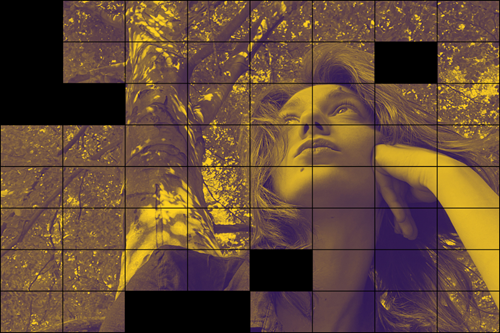
Simina Oprescu is a Romanian composer and sound artist currently based in Berlin, whose work explores the physical and perceptual dimensions of sound. With a strong focus on movement, resonance, and presence across both audible and inaudible spectrums, she creates compositions that bridge technical experimentation and emotional experience. Her practice blends electroacoustic composition, spatial sound, and psychoacoustics, positioning sound as both a material force and a medium for memory, sensation, and attention.
Working across stereo and multi-channel formats, Oprescu integrates synthetic and natural sources, drawing from recordings of physical objects and natural environments. Her immersive soundscapes investigate how sound travels through space and perception, inviting audiences to engage with its vibratory nature as an embodied and collective experience. Her work consistently engages with themes of unity, focus, and the ephemeral qualities of acoustic environments.
Orpescu’s compositions have been presented at major international institutions and festivals, including EVA International | Ireland’s Biennial, Museum Tinguely in Basel, Märkisches Museum in Berlin, Palmer Gallery in London, Art Encounters Foundation, MOTA Museum, n.b.k. Berlin, Hošek Contemporary, Suprainfinit Gallery, MARe Museum of Recent Art, SONICA, Cynetart, Rokolectiv, Simultan, and ORF musikprotokoll. Her releases on the Swiss label Hallow Ground have garnered attention from publications such as The Quietus, The Wire, and Positionen Berlin. In 2020, she was selected as a SHAPE+ platform artist, further expanding her impact on emerging sound and audiovisual art across Europe.
Art as a Catalyst for Ecological Imagination
Each of these artists brings a unique perspective to the question of how we live with - and respond to - air pollution. What unites them is a commitment to make environmental issues tangible, relational, and emotionally resonant. By grounding their work in data and community memory, they extend the boundaries of artistic practice and propose new ways of perceiving ecological realities. Transition to 8 is not just about making art - it’s about building bridges between disciplines and between people. Stay tuned for updates on exhibitions, artists’ open studios, workshops, and events as the Transition to 8 project continues to unfold across Europe.